De-risking the Silver Tsunami: How to Capture Tribal Knowledge and Reduce Founder Dependency
Yasmine Johnston-Ison
On paper, the opportunity is incredible. But once the Letter of Intent (LOI) is signed, buyers are faced with the ultimate operational risk: Founder Dependency.
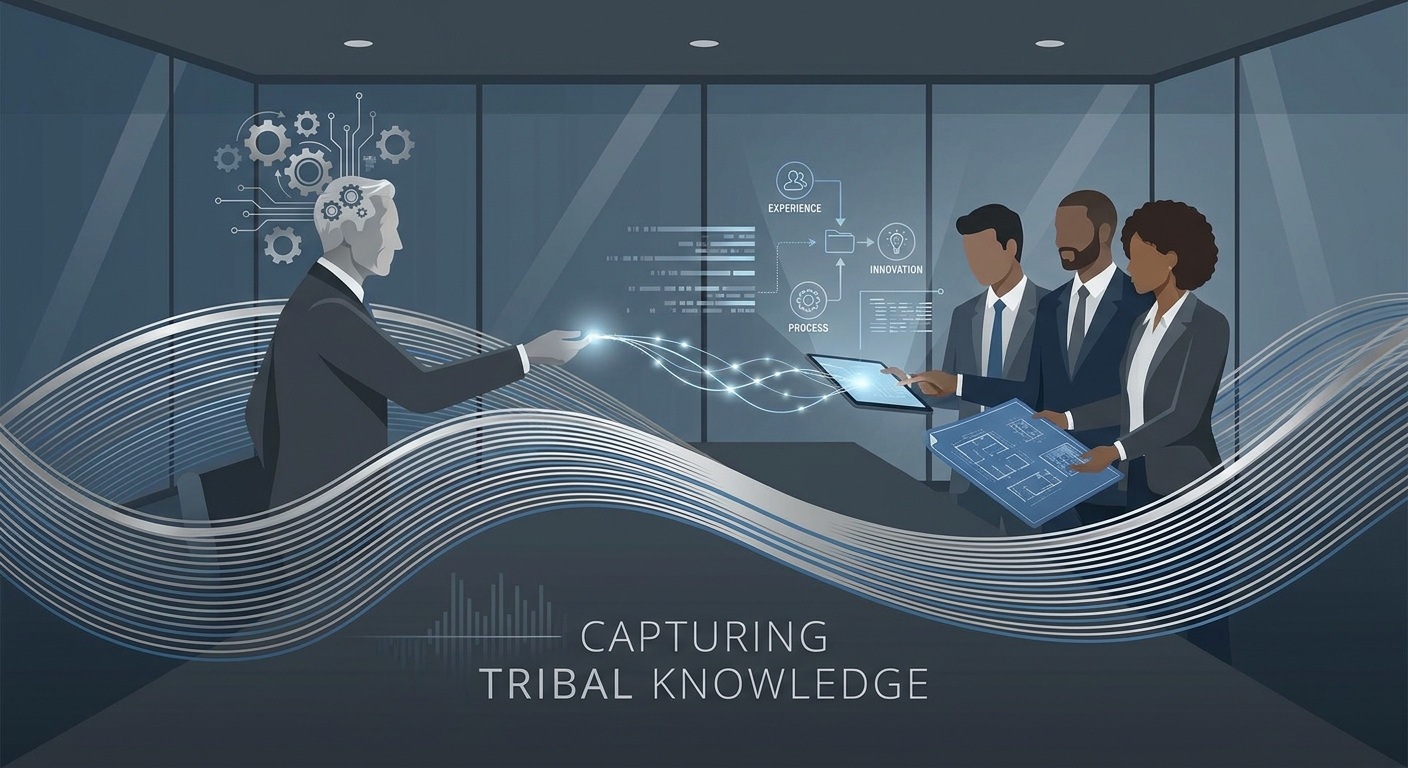
In a typical founder-led service or light manufacturing business, the owner doesn't just run the company—the owner is the company. They maintain relationships with key customers, understand the unique quirks of the inventory system, and carry the unwritten operational playbook in their heads.
If that knowledge isn't systematically captured before the handoff, the deal value can evaporate overnight.
What the Data Says About Search Success
The financial returns of Entrepreneurship Through Acquisition (ETA) are highly attractive, but the distribution of those returns is highly uneven.
The Stanford Graduate School of Business 2024 Search Fund Study, which tracked 681 traditional search funds, revealed that the model achieved a remarkable aggregate pre-tax internal rate of return (IRR) of 35.1% and a 4.5x return on invested capital.
However, the study also highlights a sober reality: approximately 30% of acquired companies ended up producing a negative ROI.
When search deals underperform, it is rarely because the market vanished or the financial models were wrong. It is almost always because the transition of operational control failed. The first 90 days post-close are characterized by owner departure anxiety, undocumented workflow breakdowns, and employee confusion.
Bridging the Operational Gap
Most buyers understand they need a transition agreement with the seller. However, a transition agreement that merely says "the seller will consult for 90 days" is not a plan—it's a hope.
To systematically extract "tribal knowledge" and de-risk the transition, we implement a structured operations playbook built on three sequential phases:
1. Systemize First (The Mapping Phase)
Before we ever recommend changing a piece of software or altering a workflow, we map the status quo. We extract the exact path of data, customer interactions, and scheduling from the founder’s head.
- Who owns the vendor relationships?
- Where are the master credentials stored?
- Exactly how does billing move from the field to the accounting software?
2. Automate Second (The High-Leverage Phase)
Only when the baseline systems are fully mapped do we look for efficiency. We avoid complex, broad-stroke digital transformations on Day One. Instead, we target the 3 to 5 highest-leverage workflows (such as customer handoffs, automated dispatch scheduling, or basic reporting pipelines) that can be standardized without disrupting business continuity or employee trust.
3. Modernize Third (The Governance Phase)
Finally, we build a lightweight operating cadence and data governance structure (such as our CLEAR / INTERNAL / RESTRICTED data tiering model) that protects your newly acquired business without burdening its small team with enterprise red tape.
Capturing the Legacy
Acquiring a business is a major financial milestone, but protecting its operational legacy is what guarantees your long-term return. By systematically capturing tribal knowledge before the transaction closes, you protect your investor capital, build immediate authority with your team, and establish a repeatable foundation for growth.
Legacy Forward Consulting was founded by a former military intelligence SME and a seasoned financial advisor and entrepreneur to give buyers the operating layer they need on Day One.
Need Structured Guidance for Your Acquisition?
Book a 45-minute strategy call with our team to discuss your search progress, deal thesis, or transition plans.
Book an Appointment45 minutes to confirm fit and define next steps.